Seaweed Diary
2024
Location:
Gijang, Busan, South Korea
Project Period:
July–December 2024
Support:
Busan Cultural Foundation, Busan Metropolitan City
Partners:
Sinam Fishing Village Cooperative, Gijang-gun Seaweed Research Center
Project Outcomes:
Presented at the Seoul Design Festival and at UN COP29 in Baku, Azerbaijan
OVERVIEW
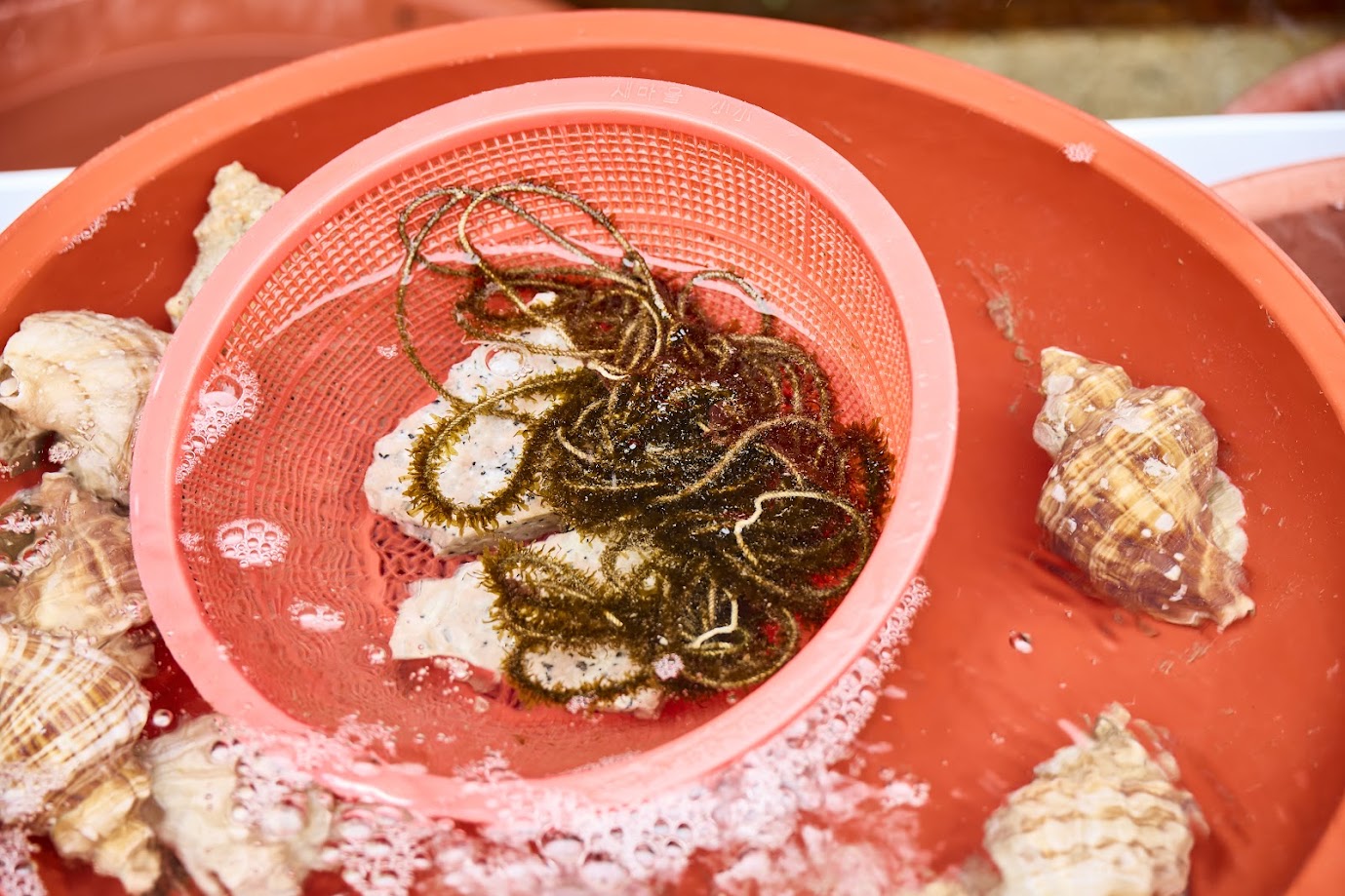
Seaweed Diary began with Gijang kelp, once prized in Korea and now increasingly threatened by rising sea temperatures. The project approached this not only as ecological loss, but as a question tied to food, birth, memory, and the intimate rhythms of human life. Gijang-type kelp was cultivated directly in the sea and followed over time before being translated into visual art, interactive media, and text.
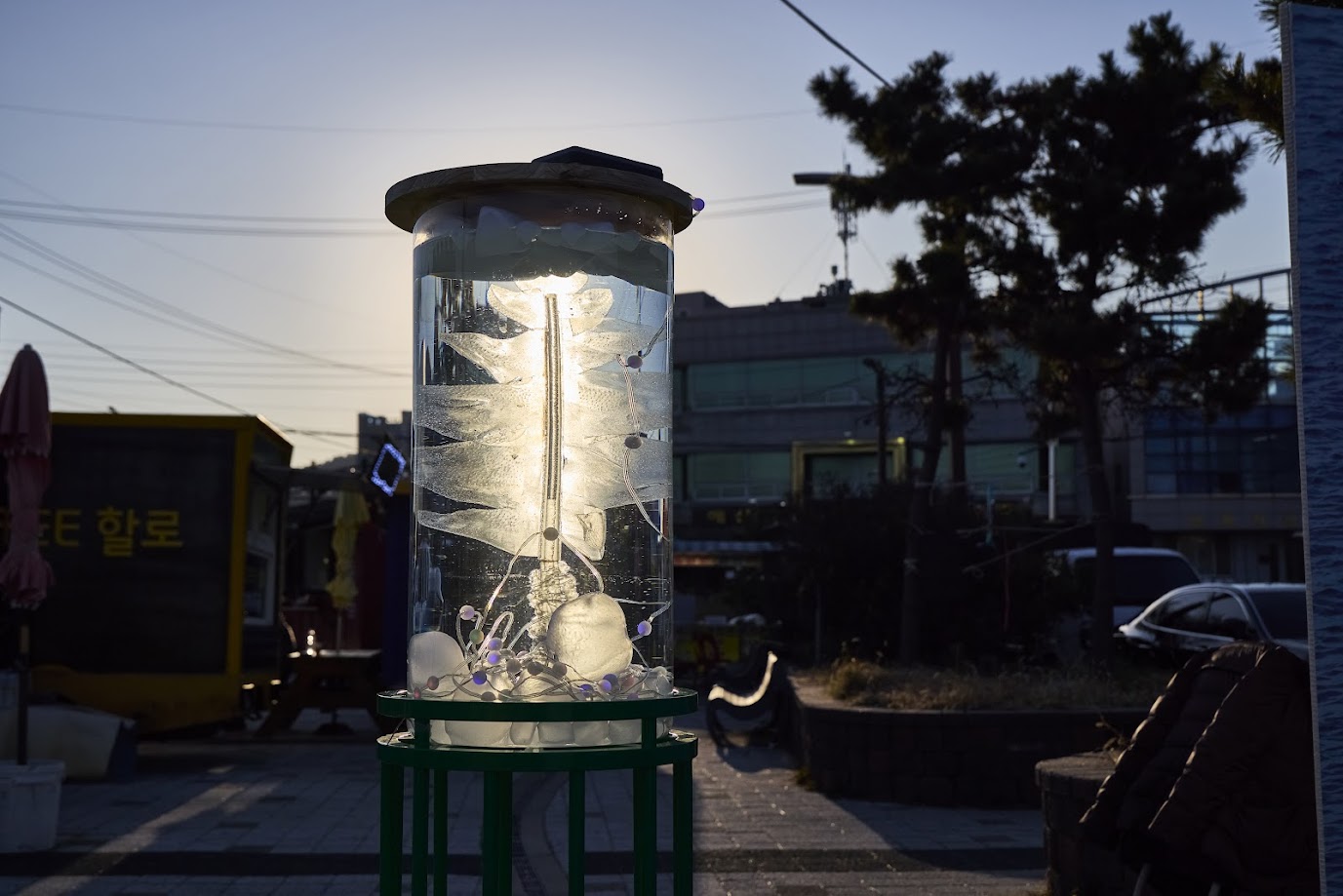
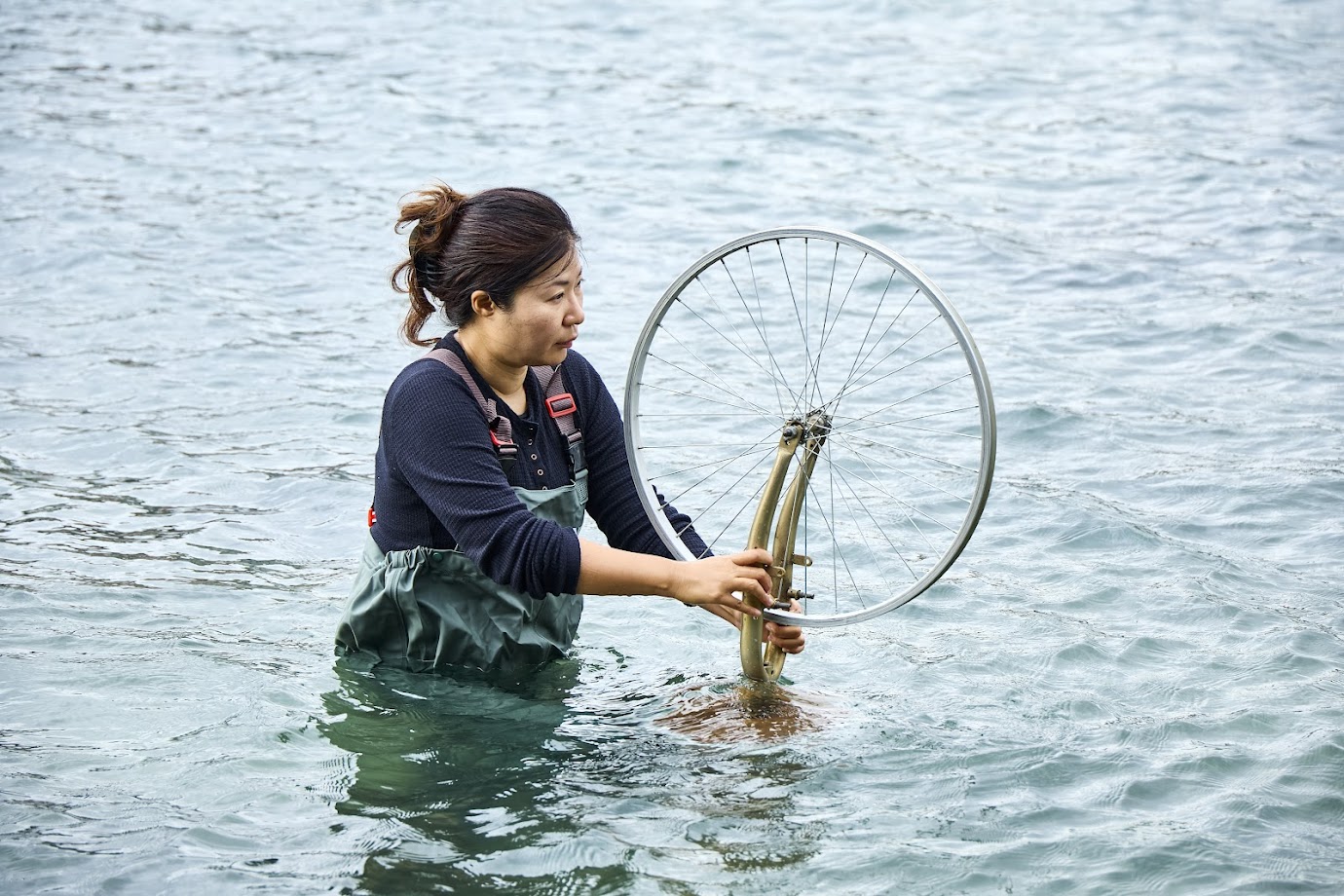
At the center of the project was Bicycle Wheel as Housing for the Seaweed, a cultivation structure at Yeonjuk Bridge that invited sustained attention toward a living organism. The work culminated in a popup exhibition in Gijang, with related presentations at the Seoul Design Festival and UN COP29 in Baku. Rather than treating kelp only as a species under threat, the project asked what else disappears when the seaweed dissolves.
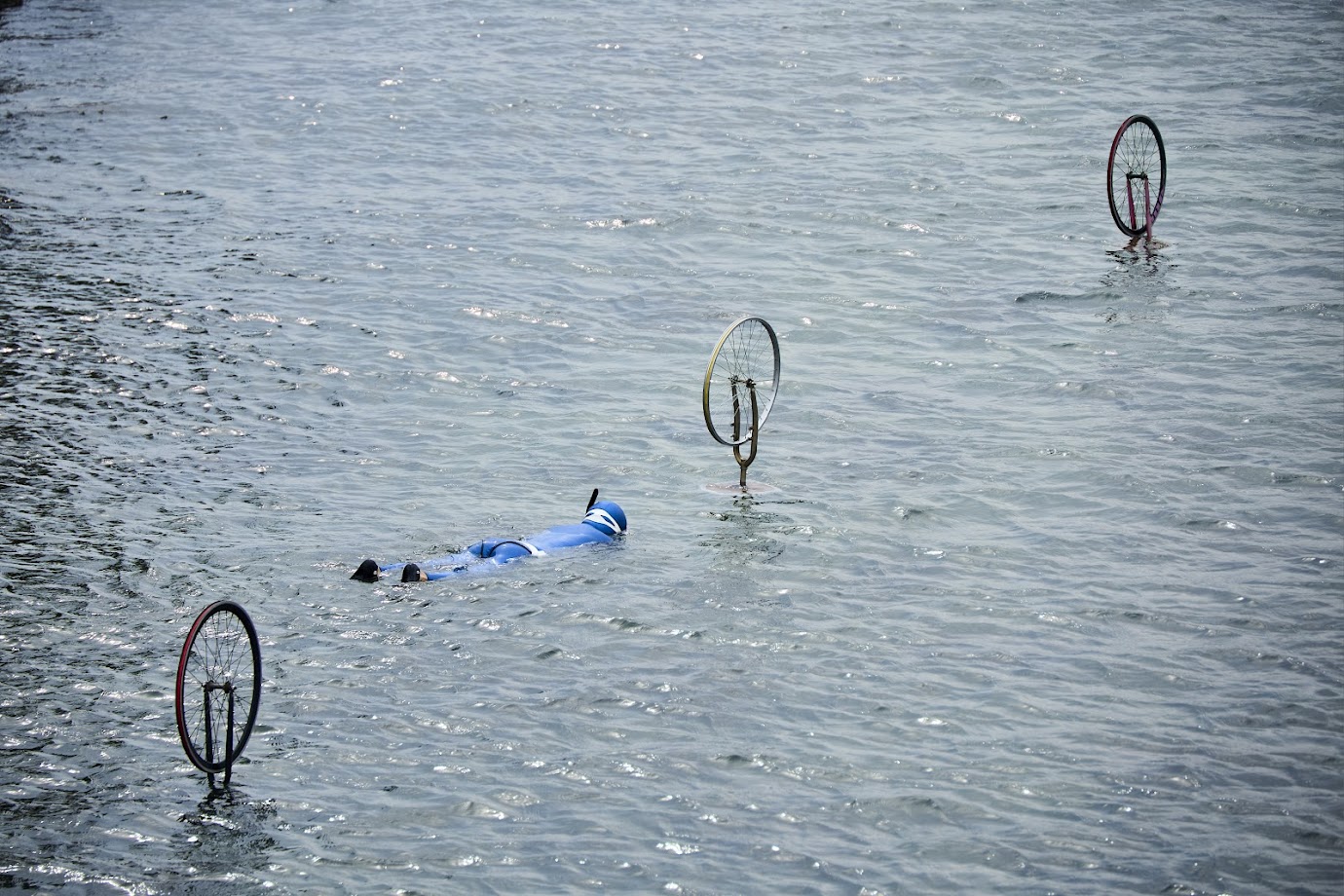
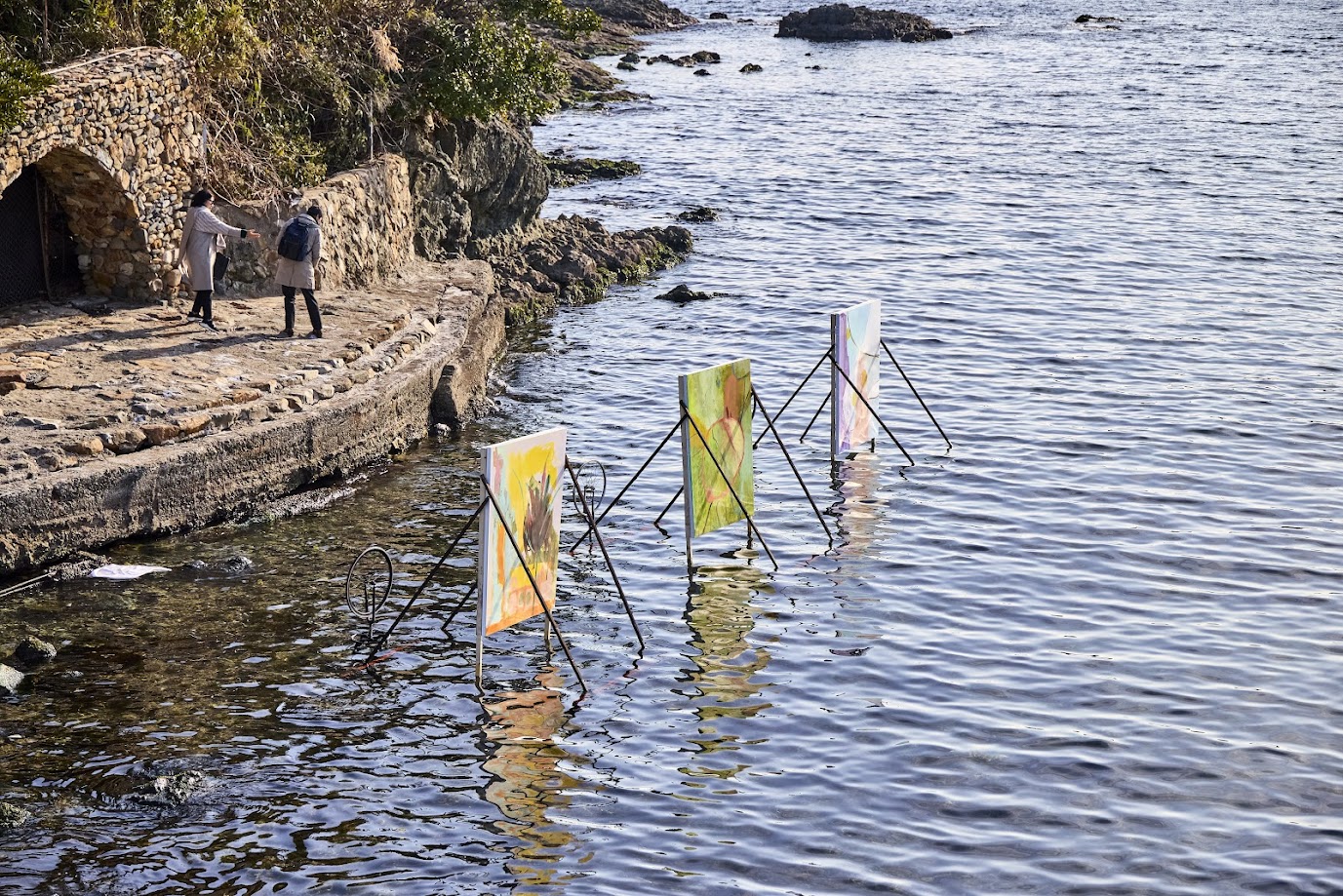
Bicycle Wheel as Housing for the Seaweed
The cultivation structure at Yeonjuk Bridge was built not as infrastructure but as a form of attention. A bicycle wheel — an object of human mobility repurposed to hold the weight of a living organism — was submerged in the tidal waters of Gijang, where kelp was grown over the course of several months. Visitors passing the bridge encountered it without announcement: a quiet, unfamiliar object asking to be looked at twice.
The choice of kelp was deliberate. Gijang-type kelp has historically marked the rhythms of birth and recovery in Korean domestic life — given to mothers after delivery, made into soup, carried through generations as both nourishment and symbol. To watch it struggle and thin under warming waters is not only to witness ecological change, but to sense something dissolving in the fabric of everyday care.
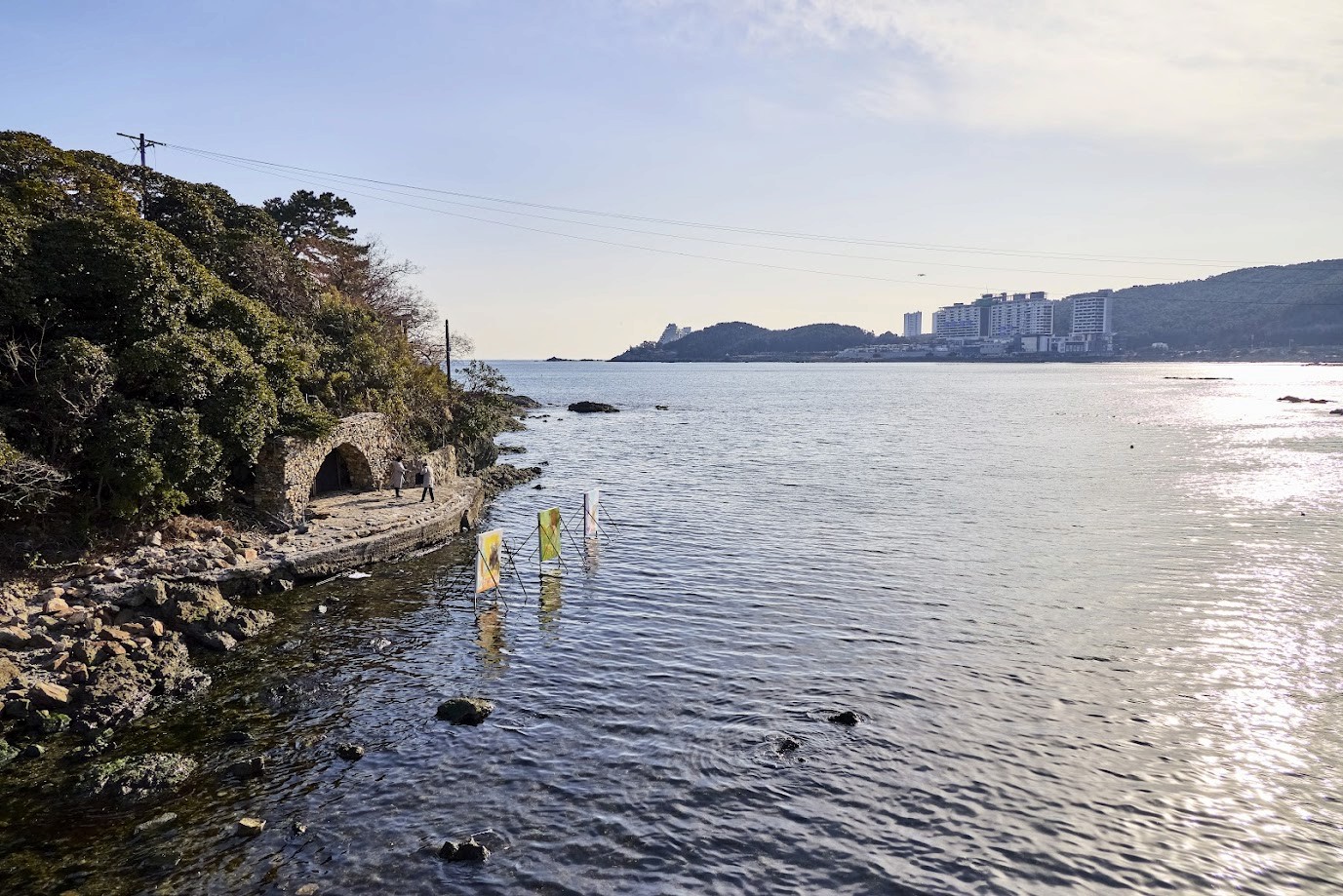

Paper, Text, and the Exhibition at Gijang
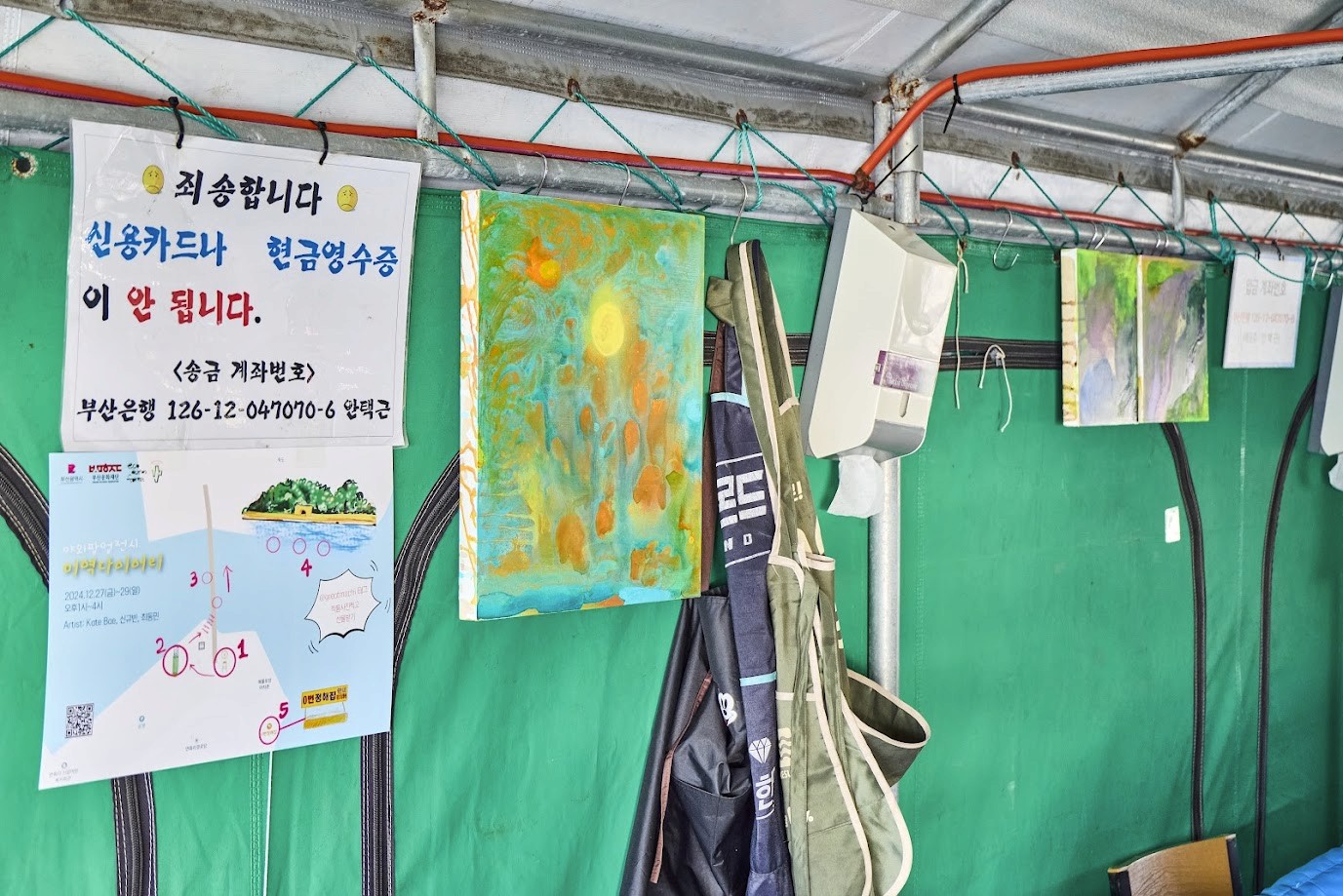
The popup exhibition brought together the cultivation process, visual documentation, and a body of text printed on paper partially composed from seaweed pulp — material drawn from the same waters the project had been observing. The paper carried its subject within itself: its texture, faint color, and slight resistance under the hand.
The texts did not explain the kelp. They moved alongside it — tracing what it means to depend on a species, to inherit a food, and to find that the sea no longer returns what it once offered. Presented later at the Seoul Design Festival and UN COP29 in Baku, the project remained less an environmental report than a record of sustained proximity: what happens when you stay close to one thing long enough for it to change you.