Project on Crisis
2023
Location:
Busan, South Korea / New York, USA
Project Period:
March–December 2023
Support:
Busan Cultural Foundation
Partners:
Women’s Cactus for the Arts
Project Outcomes:
Presented at UN COP28 in Sharm El-Sheikh, Egypt
OVERVIEW
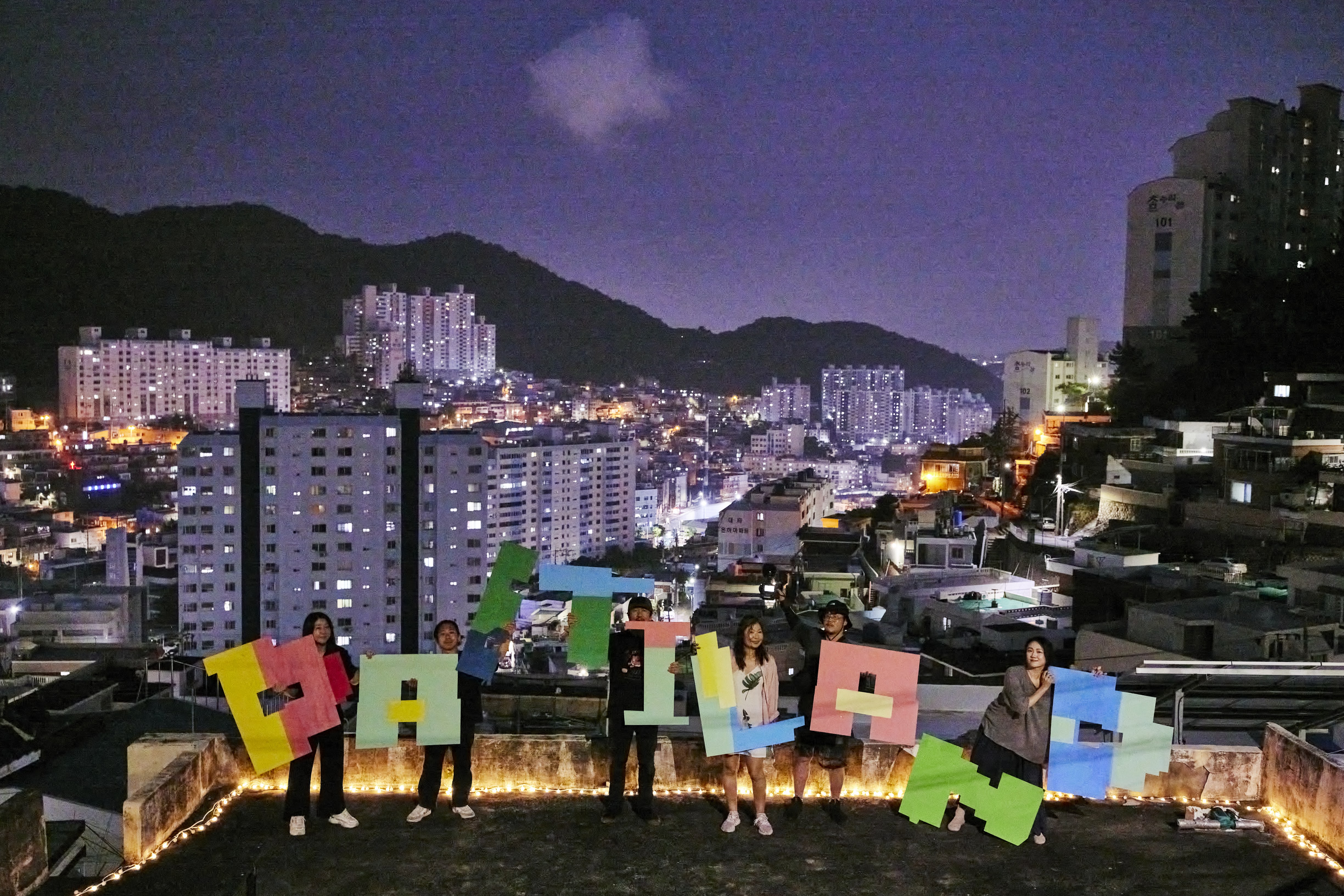
Project on Crisis emerged from the question of how artists living in different conditions might think and work together under crisis. Developed between Busan and New York, it took climate crisis, relation, racial conflict, and gender not as themes to illustrate, but as lived conditions to move through collectively.
Research, collaborative workshops, public presentation, and an online platform formed the structure of the project. What mattered here was not a single finished result, but the possibility of sustained cross-cultural exchange through artistic process — slow, relational, and open to difference.

Keywords Shaped Through the Village
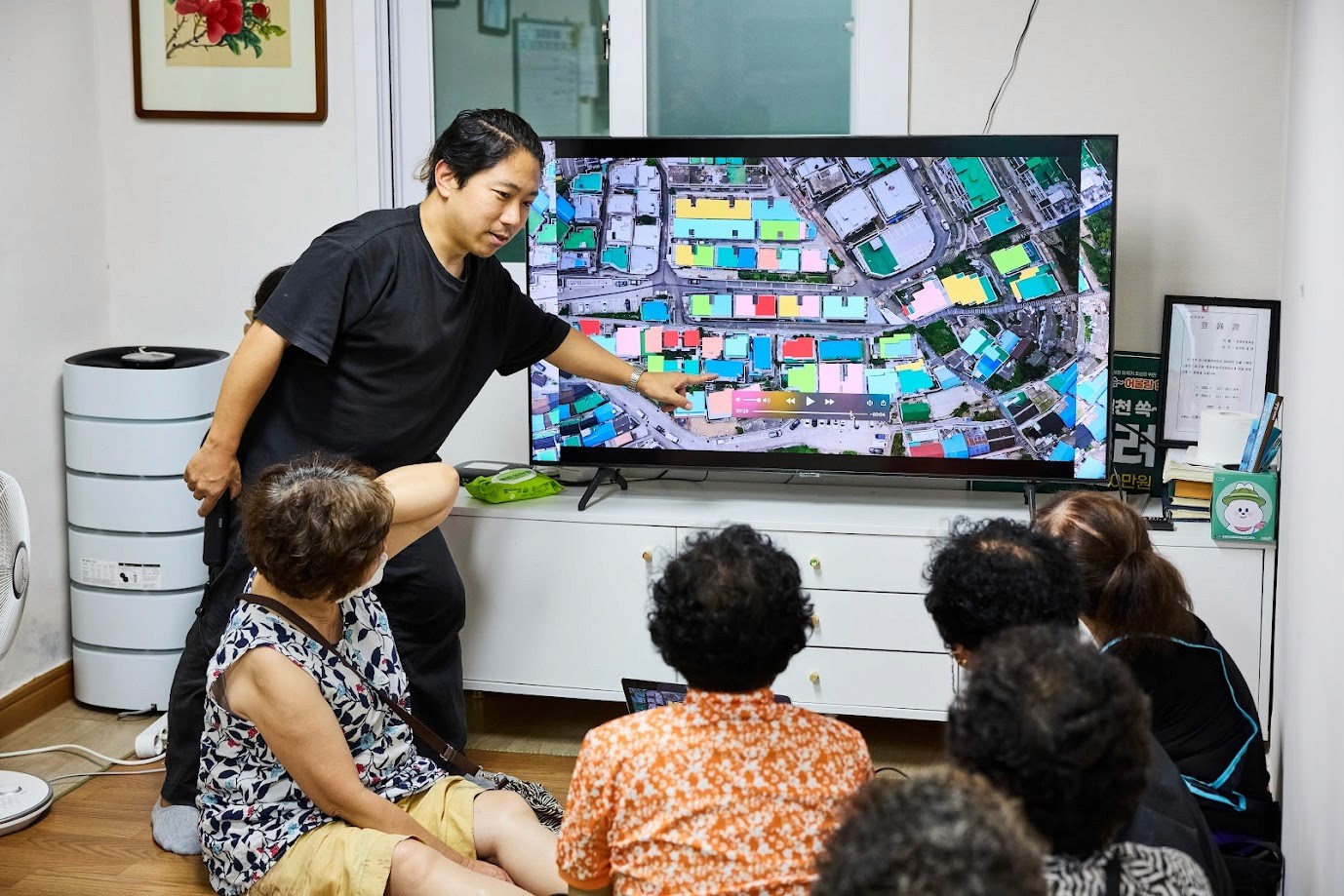
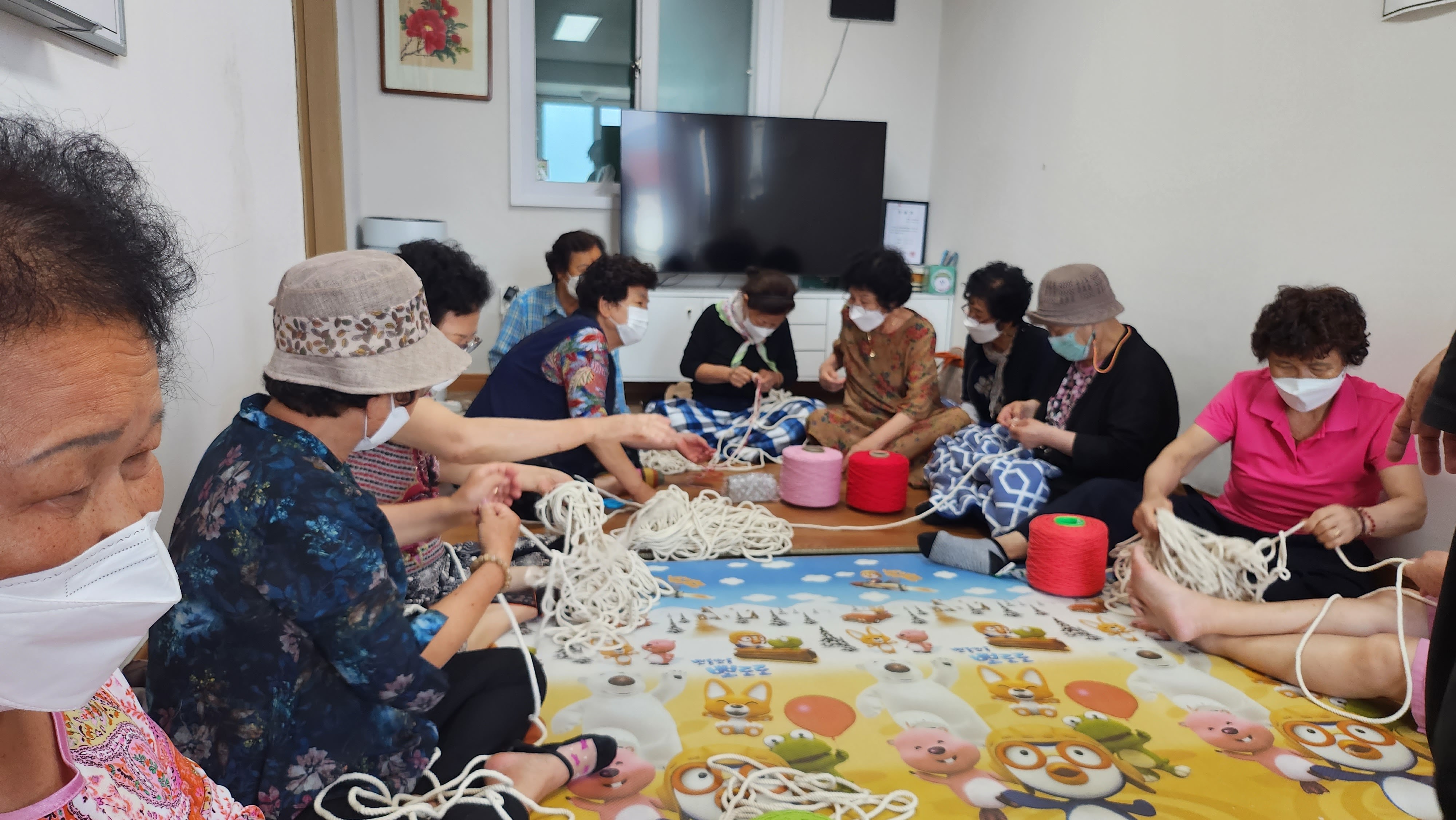
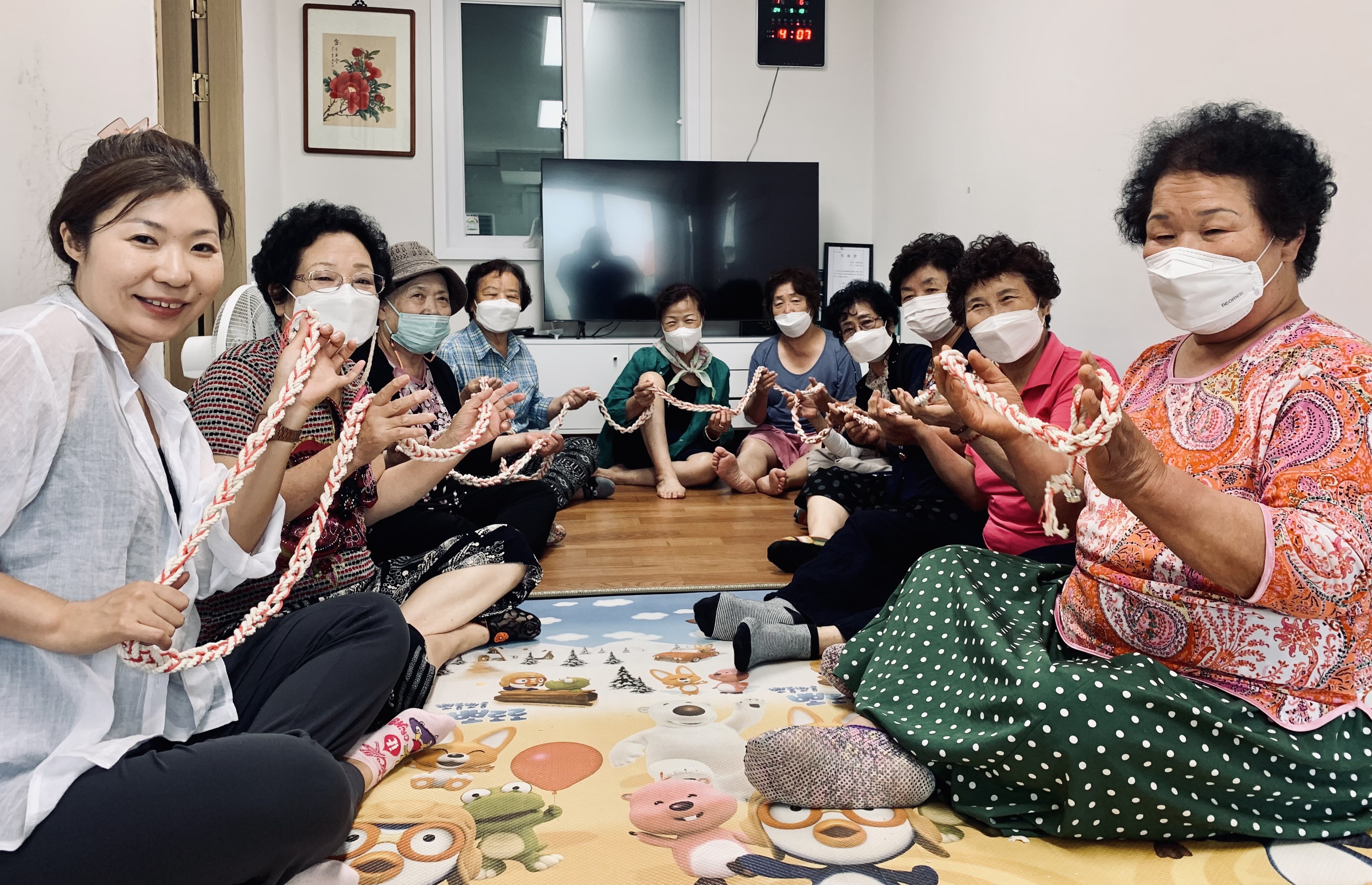
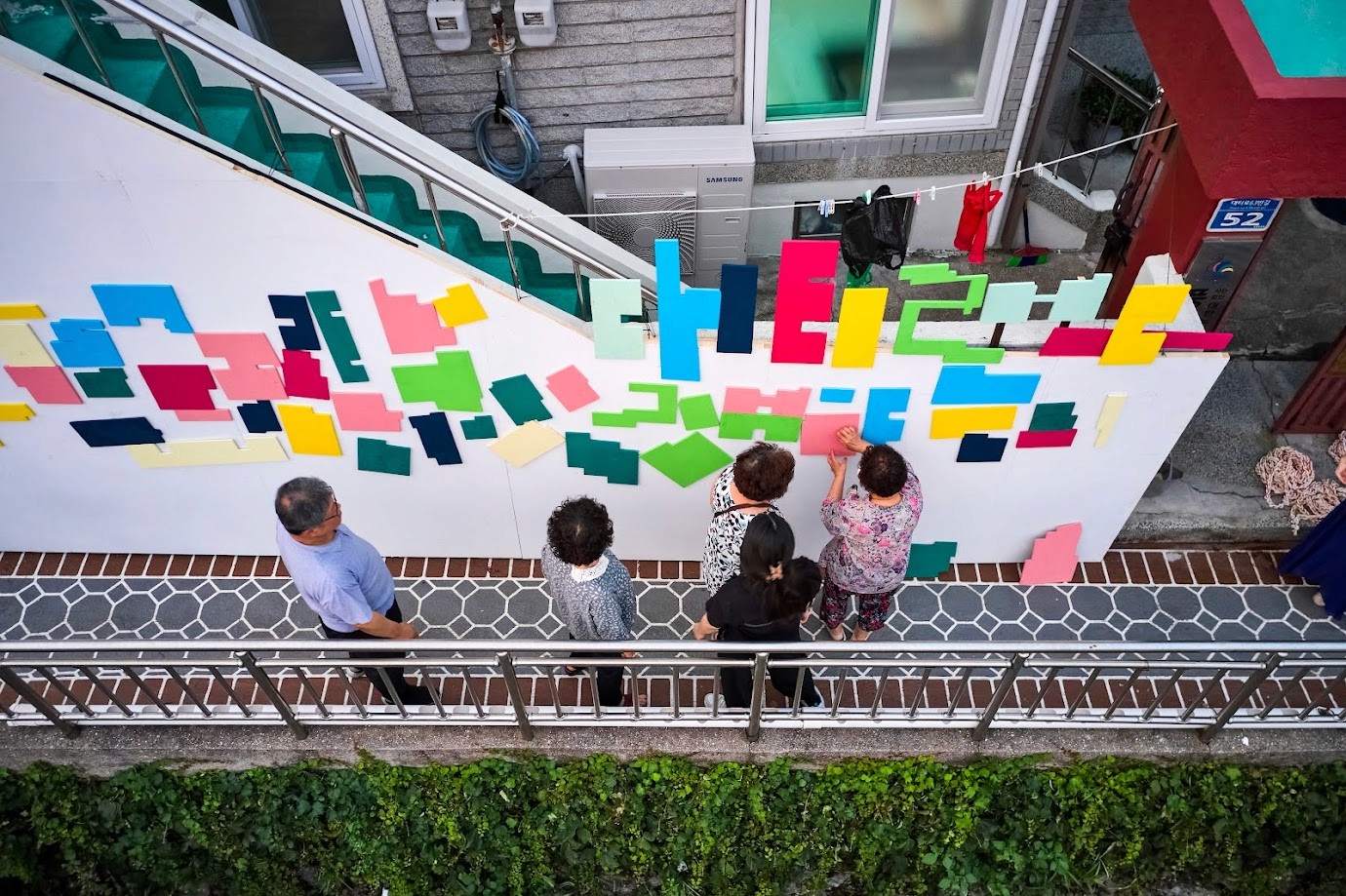
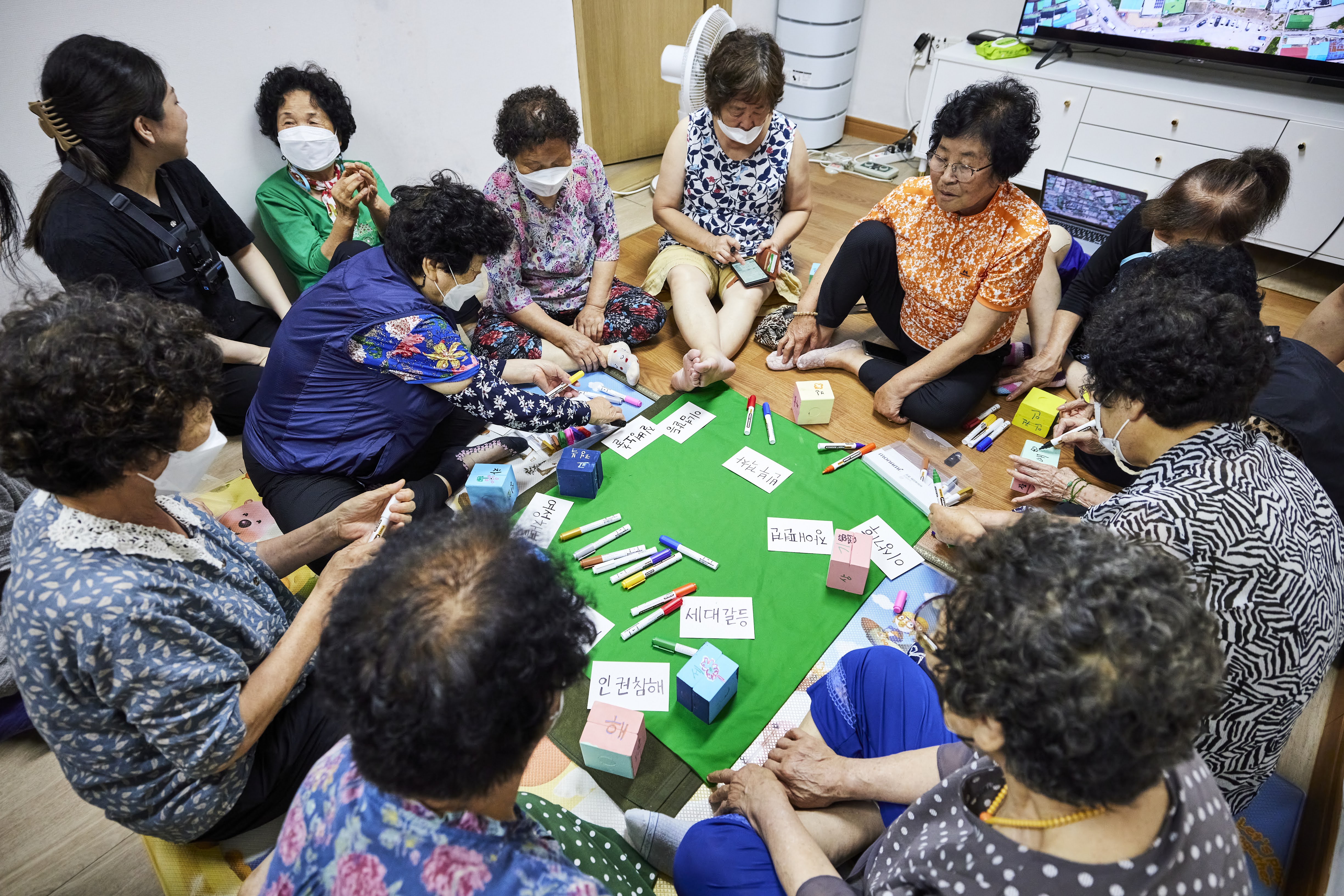
Project on Crisis was grounded not only in exchange between cities, but in close work with residents of Daetigogae Village. The process invited elderly women from the neighborhood to participate, speak, and respond from their own lived experience. Rather than asking them to illustrate a theme, the project listened to the words, memories, and concerns that emerged from their point of view.
These keywords did not function as captions to a pre-existing artwork. They became part of the work’s structure itself — a way of letting the village speak in its own language. Through this process, crisis was understood not as an abstract global term, but as something felt through everyday relations, memory, care, and the changing conditions of place.

Walking Performance Through the Village
The project extended into performance by moving through the village itself. Walking became a way of connecting dispersed places, people, and perspectives — not as spectacle, but as a collective act of tracing the social and emotional landscape of Daetigogae. The performance did not stand apart from the community; it unfolded through the paths, encounters, and accumulated meanings of the place.
In this sense, the work was less about representing crisis than about moving with it together. The act of walking linked the residents’ words, the artists’ responses, and the village’s geography into a shared form. What emerged was not a single conclusion, but a situated process in which relation itself became the medium of the work.