Planting the Stars
2018

Location:
Hocheon Village, Busan, South Korea
Project Period:
April–December 2018
Support:
Busan Cultural Foundation
Partners:
Busan Climate & Environment Network, Ministry of Environment
Project Outcomes:
Presented at UN COP24 in Katowice, Poland
OVERVIEW
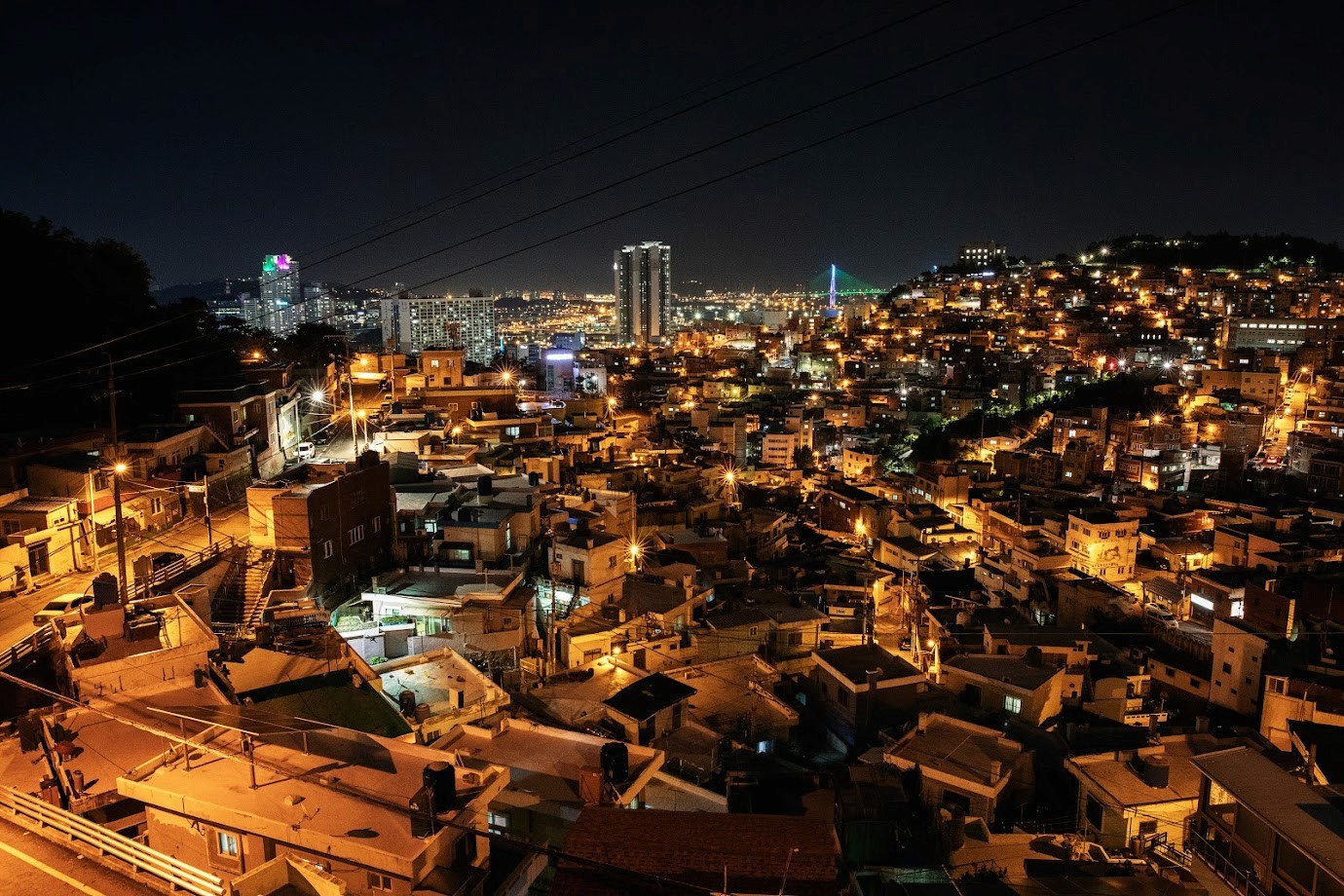
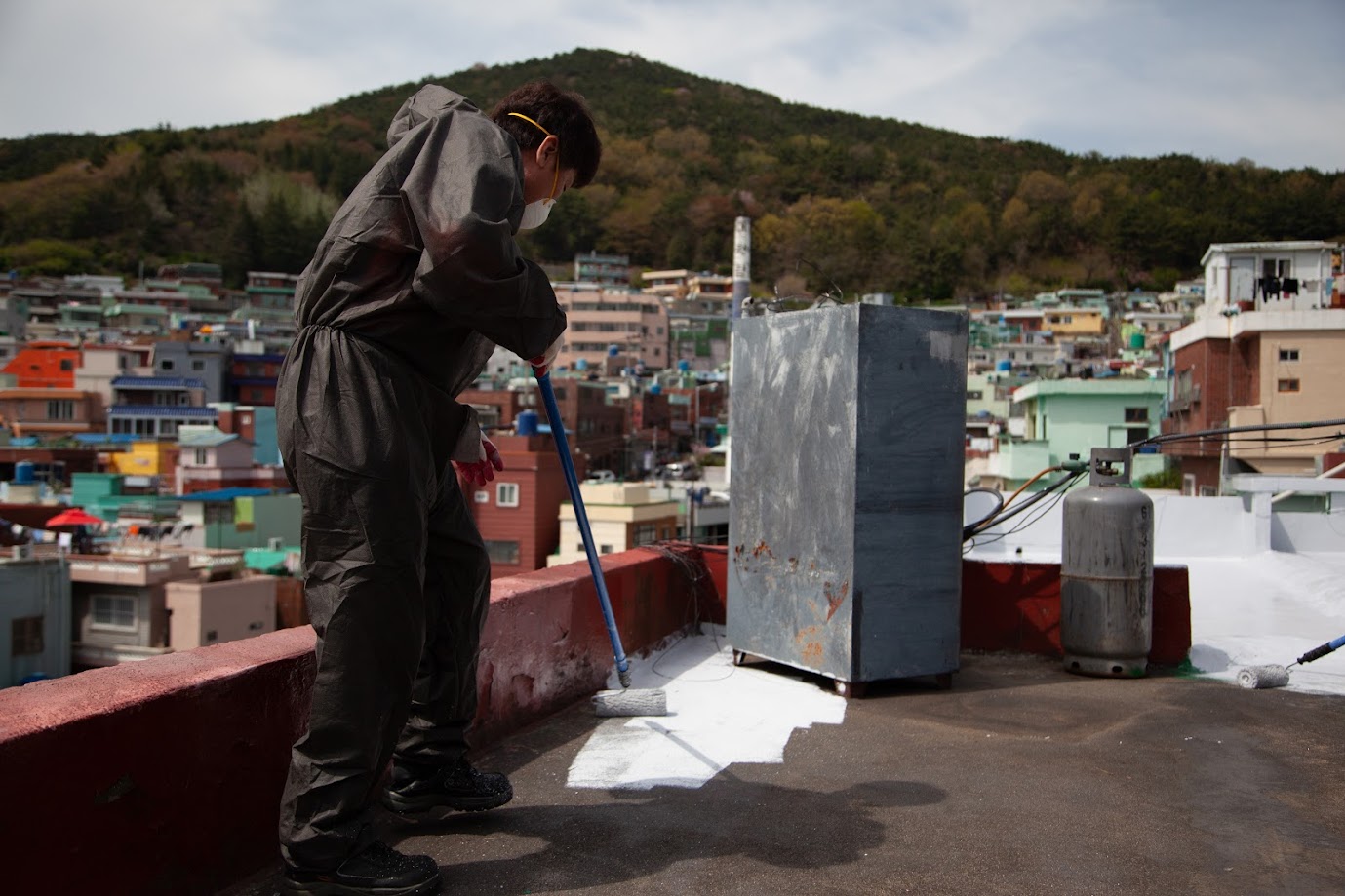
Developed in Hocheon Village, a dense hillside neighborhood in Busan, ECO ART: Planting the Stars began from the rooftop as both a symptom and a surface of urban heat. Over 43 days, approximately 500 residents and volunteers brought cool-roof action to 97 rooftops, reducing heat while transforming the neighborhood into a shared visual field.
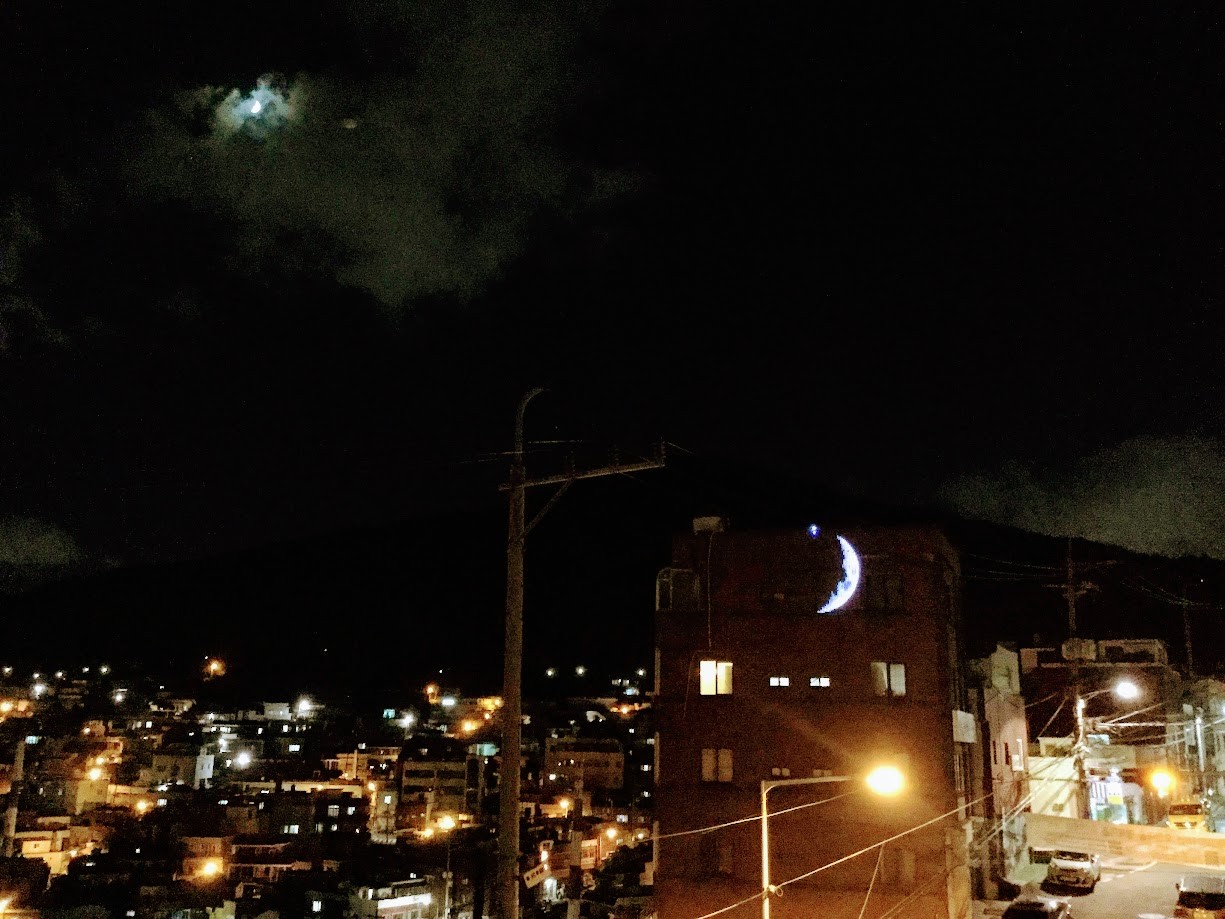
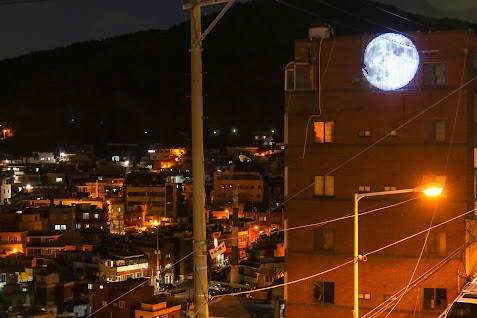
The project connected ecological action, neighborhood stories, and live climate data through three linked works, including Moonlight, a solar-powered media installation whose color shifted in real time through rooftop temperature data. By weaving environmental response, media, and local participation together, the project proposed a form of public art rooted in everyday community life.

White Rooftops as Climate Action
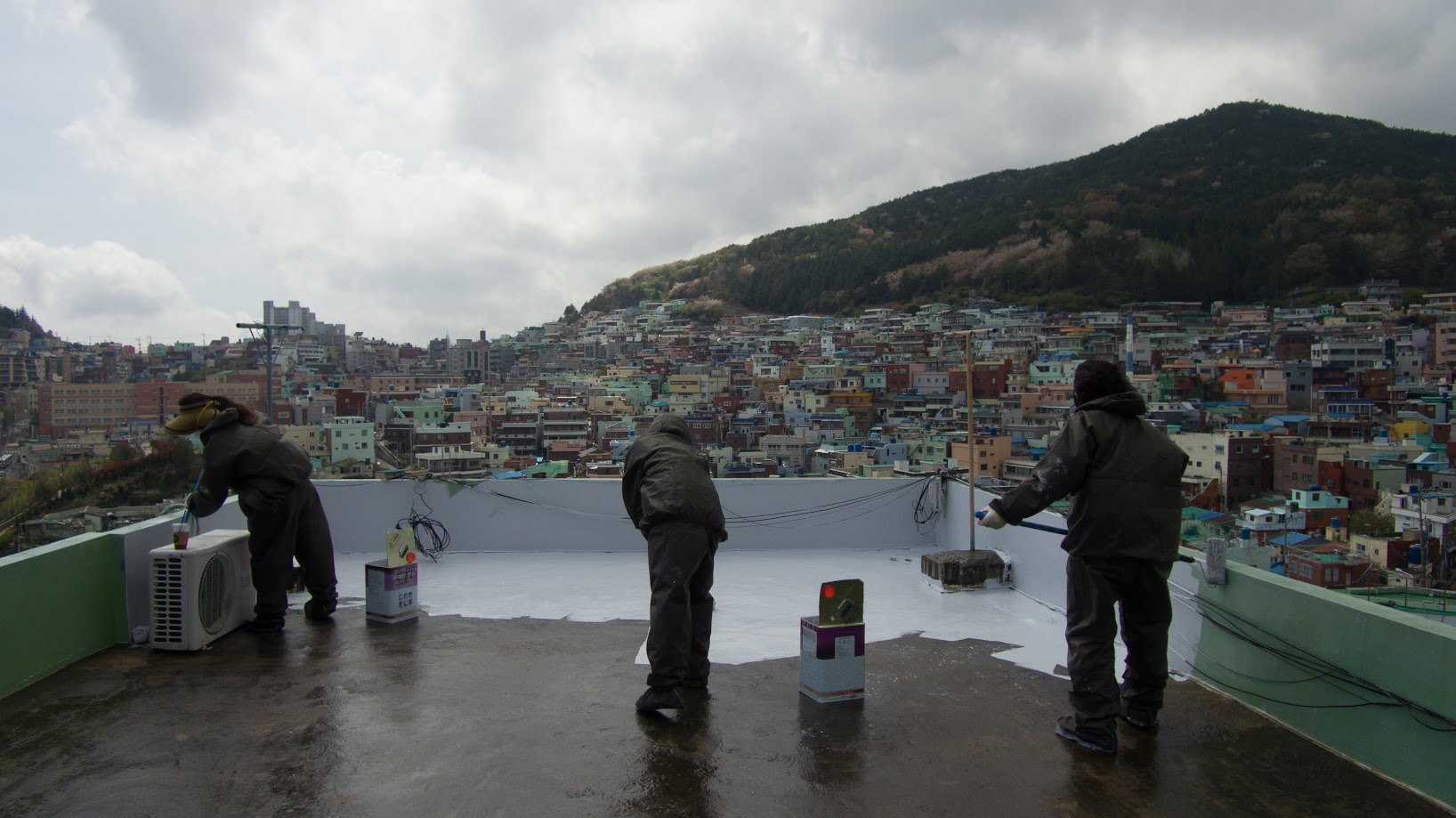
The project began with the rooftop. In Hocheon Village, residents and volunteers worked together to coat rooftops in white, turning them into cool roofs over the course of 43 days. This collective action helped lower indoor temperatures by reflecting heat, while also changing the visual surface of the village itself. What had been scattered roofs became a shared field of climate adaptation.
The transformed rooftops also became a stage. Their whitened surfaces made visible a form of environmental action that usually remains technical or unnoticed. In Planting the Stars, climate adaptation entered public art through labor, participation, and the everyday architecture of the neighborhood.

A Moon and a Star for the Village
The project also reshaped the village after sunset. At the highest point of the neighborhood, a moon was installed so that it would rise and fade each evening, responding to the life of the village below. On one rooftop, a star was also placed, turning Hocheon into a place where the moon and star appeared and disappeared as part of daily life.
This gesture carried a particular resonance in Korea, where blue skies, moonlight, and stars have often been obscured by fine dust and yellow dust. By placing a moon and a star back into the village, the project gave form to a shared longing for the night sky while connecting ecological reality, media installation, and neighborhood imagination.