Climation in Philippines
2025

Location:
Dumaguete and Apo Island, Philippines
Project Period:
December 2025
Support:
Busan Global City Foundation
Partners:
Silliman University IEMS, MUGNA Gallery
Project Outcomes:
Selected for the 2025 Busan ODA Incubating
OVERVIEW
Climation is an art research project shaped through a marine science and art exchange between Busan and Dumaguete.
The project began at Silliman University Institute of Environmental & Marine Sciences, where Eco Action Forest met students, faculty, researchers, and staff through a shared day of lectures, dialogue, and hands-on visual translation.
Before the workshop began, the ocean was opened through many voices. IEMS faculty and researchers spoke about the Dumaguete coast, marine ecosystems, biodiversity, fisheries, coral conservation, whale and dolphin conservation, marine invertebrates, shark conservation, and student-led marine conservation initiatives.
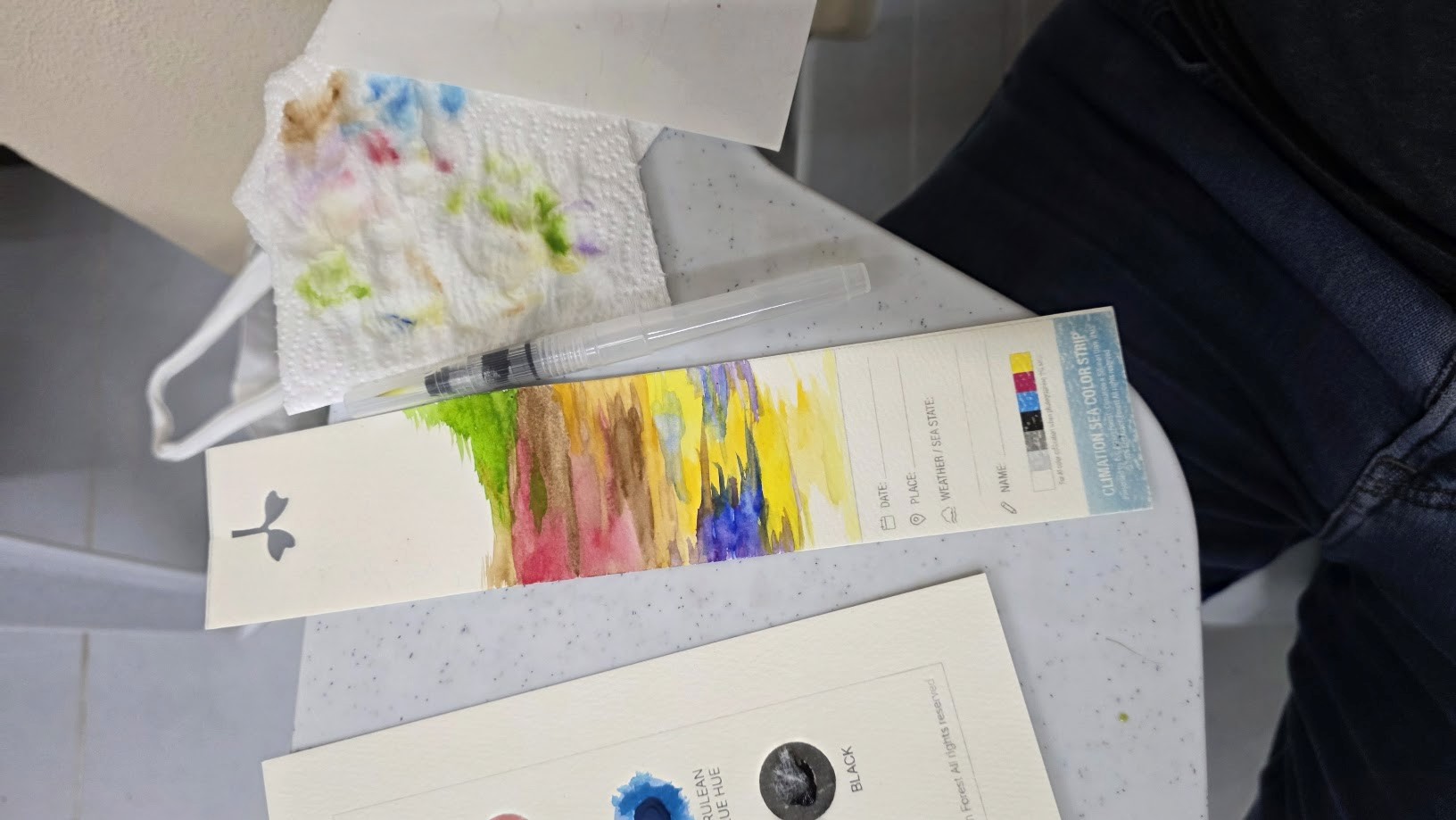
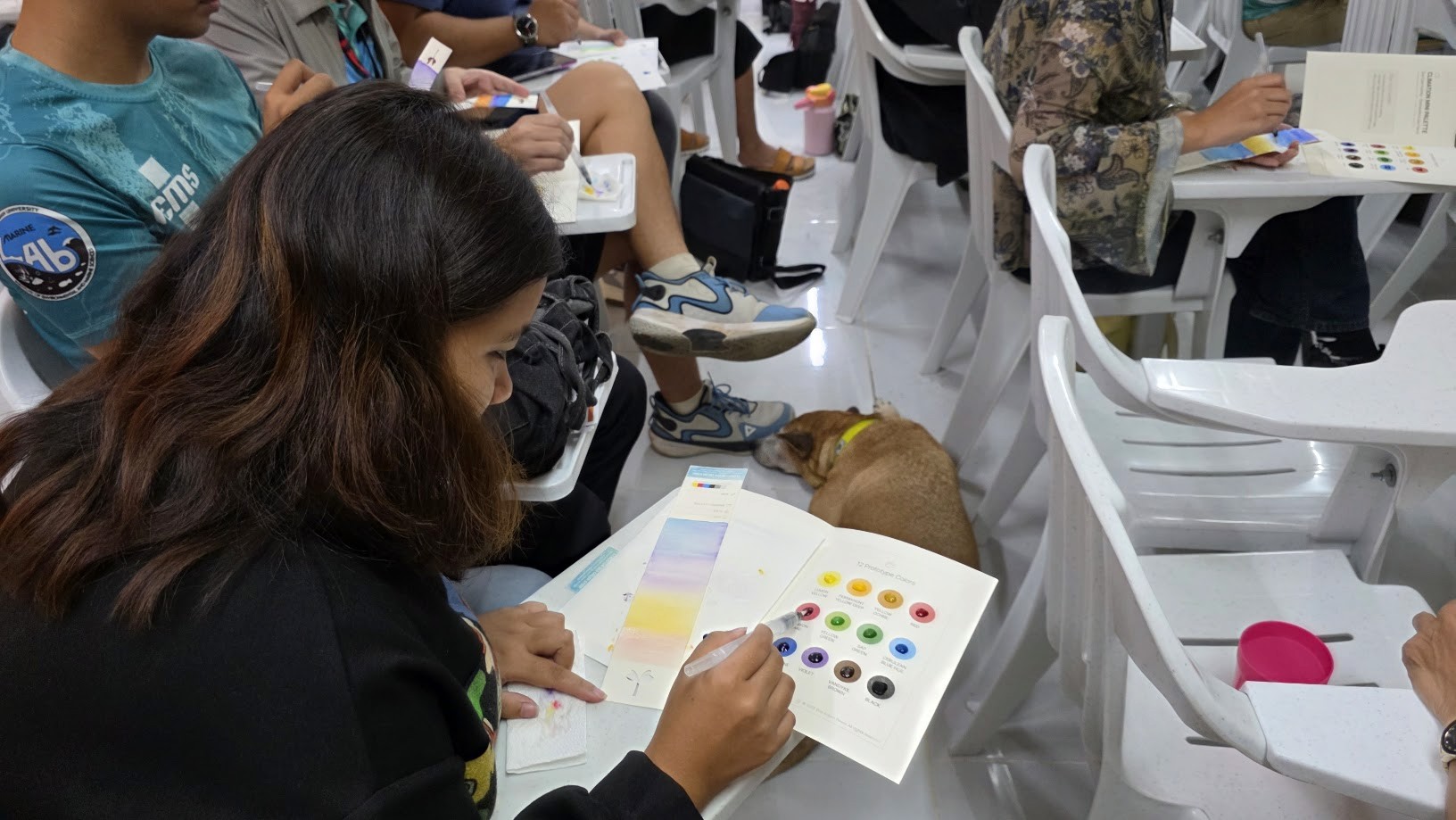
The room then shifted from lectures to palettes. Marine Biology and Environmental Science students worked with watercolor palettes and brushes, translating coastal observations and environmental data into color, rhythm, and image. Scientific terms such as temperature, salinity, pH, and turbidity entered the page not only as measurements, but as visual traces of a changing sea.
For Eco Action Forest, Climation is not a finished model brought from Busan. It is a listening structure. It begins by asking how young people can sense the ocean through science, memory, image, and care, and how those ways of sensing can become a shared language for coastal climate action.

Silliman University IEMS Workshop
The Climation Palette Workshop became the center of the first Busan–Dumaguete exchange.
The palette was used as a small field tool: a surface where data, water, color, memory, and personal perception could meet. Students moved between marine science and artistic interpretation, between what can be measured and what can be felt.
Eco Action Forest introduced the Ocean Climation Project as a way to gather essential ocean indicators through citizen science and artistic practice. Artist collaborators Kate Bae and Hyo Jung Bae shared how their own practices meet ocean conservation, coastal memory, and environmental advocacy.
Rather than separating science and art, the workshop placed them side by side. Marine knowledge entered the hand through the brush. Art became a way to hold complex environmental change without losing its local texture.
The exchange opened a mutual research dialogue with Silliman University IEMS, whose long experience in marine science, coastal education, service learning, and community-based environmental knowledge became a vital part of the project.

Field Research and Artist Exchange
The research continued beyond the university.
In Apo Island, Eco Action Forest carried out underwater observation and field listening around marine conservation. The island offered a living context for Climation’s questions: how communities read the sea, how conservation is remembered, and how underwater change can be sensed beyond numbers.
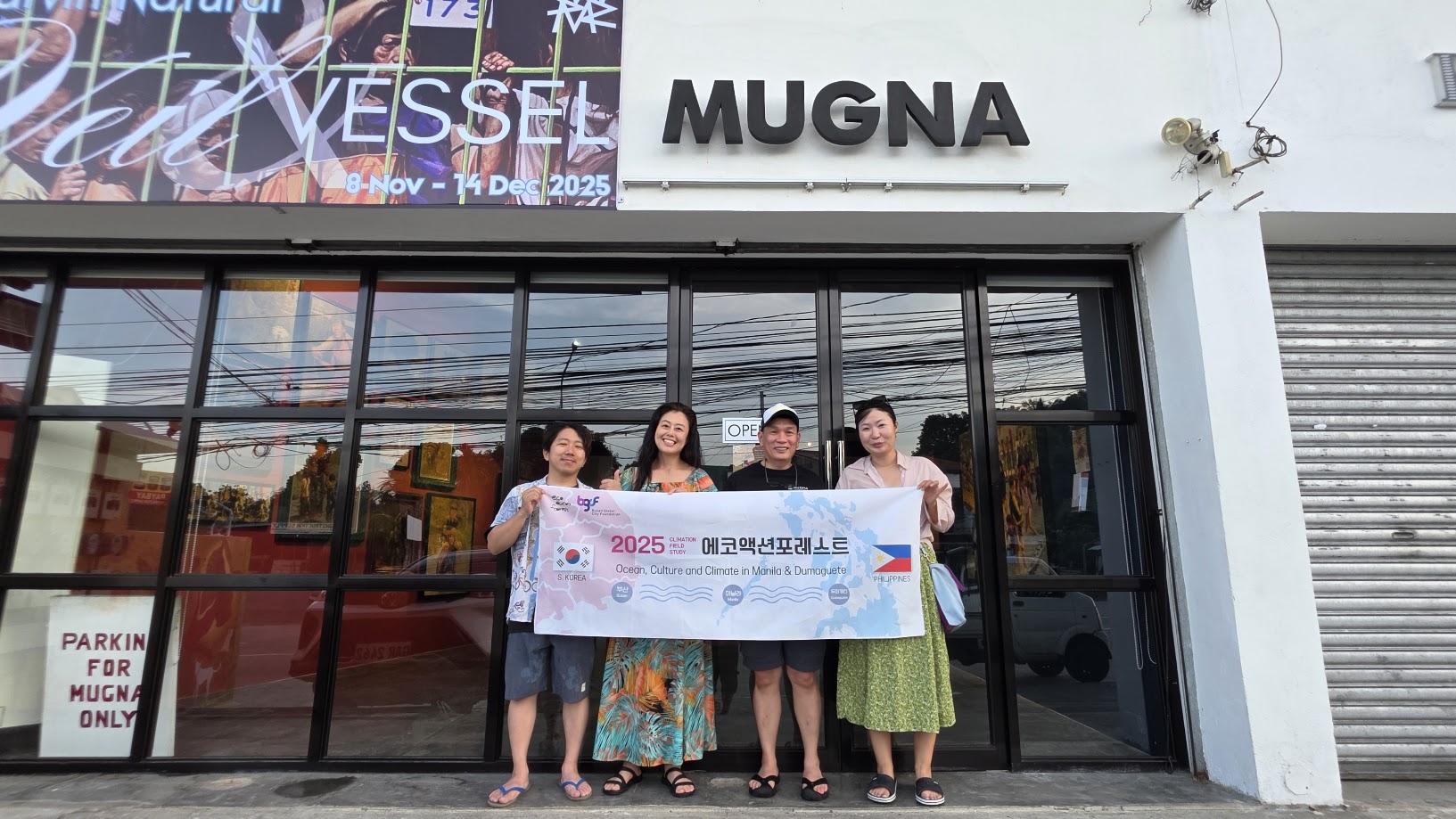
In Dumaguete and Valencia, the project moved through local art spaces and artist networks. Exchanges with MUGNA Gallery and regional artists opened another layer of the research, asking how ocean and climate issues can travel through image, material, story, and community practice.
Together, these encounters formed the first ground of Climation as a coastal climate art research platform. From Busan to Dumaguete, the project began with a simple movement: to sense the ocean together, to translate what is sensed, and to imagine how coastal cities might learn from one another.